Touraine - from then until now!

This blog is an attempt to show some of the vast history of Man's prescence in the Southern Touraine.... from first footfall to the present....
especially in and around le Grand Pressigny area.... with special emphasis on life at and around le Moulin de la Forge.
There will also be occasional entries about time before man was here and when the area was at the bottom of a warm, shallow sea...


Showing posts with label 1915. Show all posts

Tuesday, 14 September 2021

Swoboda and the radical lawyer


La Touraine with two masts


In April 1 1915, Raymond Swoboda was charged with the sabotage of the liner La Touraine on which he was a passenger. Subsequently he was also charged with espionage. He chose as his défenseur Maitre Alexandre Zévaès, as was reported in Le Petit Havre of 29th April 1915. A défenseur is effectively a barrister, and stands up in court on his client's behalf, but would have done a lot of the digging work as well. Zevaes agreed to act for Swoboda.


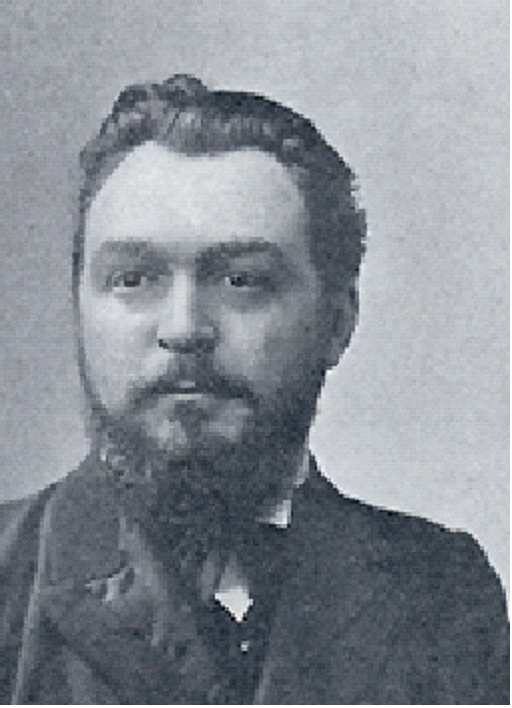
Alexandre Zévaès - from the library of the Assemblée Nationale

Zévaès was the nom de guerre of Alexandre Bourson, who chose this pseudonym in homage to the writers Michel Zévaco (1860-1918, anarchist) and Jules Vallès (1832-1885, socialist). As well as a lawyer, he was a writer and a politician. According to his Wikipedia entry, Zévaès was an MP, deputé for the département of Isère between 1898 and 1902 and from 1904 to 1910,  as a member of the (marxist) Parti Ouvrier Français. From 1898 he was an active Dreyfusard. He was a significant enough barrister to act for the assassin of Jean Jaurès in 1917. He is known today for his series of books on the history of Socialism under the Third Republic. And he was a freemason.

Much was made in the press of reported sightings of Swoboda sneaking around the streets of Viroflay where he lived, "dressed as a mason", this being cited as proof that he was spying, or at the very least up to no good. Come on chaps, wakey wakey. He was a freemason too, wasn't he? That's why a notable lawyer agreed to act for a nobody like Swoboda - he was a brother.

By 28th June 1915 the sabotage charge had been dropped, as it was apparent that the fire was accidental (despite "Secret History" including it on its list of sabotage operations), and the only evidence of the espionage charge was that Swoboda had lied about his background, which is no evidence at all. The charges eventually fizzled out virtually unnoticed by the press, and Swoboda disappeared from the public gaze. This comment in Le Rappel of September 1916 is all I can find:

Le commandant Julien, chargé de l'en-
quête relative à l'affaire Schwind-Swoboda
vient de clore son instruction et a trans-
mis son dossier au gouverneur militaire
de Paris. Il conduit à un non-lieu sur les
deux clefs d'accusation. Si ces conclusions
sont adoptées, Swoboda-Schwind quittera
prochainement la prison de la Santé.

Commandant Julien, charged with the enquiry concerning the Schwind-Swoboda affair, has just completed his investigation and has sent his dossier to the military governor of Paris. He has dismssed both charges. If these conclusions are adopted, Swoboda-Schwind will leave the Santé prison shortly.

Monday, 3 April 2017

The circle of fire - part 4: proof of concept

La Touraine, by Ernest Louis Lessieux - own postcard, postmark illegible

The forensic scientists, as they would now be called, investigating the fire aboard La Touraine, were looking for the point of ignition of the fire and the remains of a bomb. By 2nd April, they had ruled out the possibility that someone aboard had set the presumed bomb during the voyage. Their latest findings were described in Le Petit Parisien on 3 April 1915, as follows:

Le Petit Parisien, 3rd April 1915

At Le Havre, the examining magistrate continues the enquiry

Le Havre, 2 April
While examining, in the warehouses of the Compagnie Générale Transatlantique, the crates from la Touraine which had been damaged by the fire, M. Barnaud, examining magistrate in Le Havre, has just made a discovery of the greatest importance. He has, in fact, found a plank - the only one left - of the packing case which was at the seat of the fire that was set aboard the liner.

It seems now to have been established, given the impossibility of the arsonist to have got into, during the voyage, the place where this case was, that a criminal hand had placed inside the crate, before the ship set off, a combustible material whose ignition only took place several days later.

If this packing case, instead of being placed in the second upper storage, had been at the bottom of the hold, la Touraine would certainly have been totally and rapidly destroyed, because of the extreme flammability of the major part of her cargo.

The third scenario

Admiral Charlier's premise was that any bomb had to be in a passenger's baggage, or smuggled into the hold during the voyage. But there is a third scenario, which Charlier failed to take into account. The passengers' goods were carried on board by dockside workers - porters - and one of them could easily have tucked a small explosive device among the stacks of packing cases and barrels in no. 2 hold.

There were people with a motive.

They had the means.

They had the opportunity.

Those three elements define the crime.

The motive

Millions of dollars worth of American goods were streaming across the Atlantic in support of the Entente's war effort, while the British blockade effectively cut off any similar stream to Germany. The Entente was employing all possible propaganda to draw the USA into the war on their side. The USA had millions of citizens and residents of German origin, some of whom looked to the land of their ancestry before the country that was their home.

Other nationalities were sympathetic towards the German side, along the line of reasoning that "my enemy's enemy is my friend": Jews who had fled pogroms in Russia and Poland, Irish nationalists, Indian nationalists. While the German ambassador had to maintain an appearance of diplomatic rectitude, his attachés had no such restrictions. They masterminded a series of conspiracies aimed at strangling US trade with the Entente of Europe, and delaying the US's entry into the war, by any available means.

Agatha Christie or Dorothy L.Sayers, great mystery writers both, never introduced a new character as the murderer in the last chapter. However for me this has been a genuine mystery, the solution to which has been proposed since 1918. I am pleased to be able to unfold a couple of wrinkles.

My main sources for this post were:

Dramatis Personae

  • Rudolf Nadolny: Chief Political Officer, German General Staff, Section 3B. Gave the general orders
  • Count Johann Heinrich  Bernstorff: German Ambassador to the USA. Lawyer and diplomat, thrower of lavish parties and "the acceptable face" of Germany in America during WW1
  • Heinrich Friedrich Albert: German Commercial agent in New York. The money man, aristocrat who outranked all of the others. Left his brief case on a tram, where the Secret Service agent who was tailing him picked it up and legged it
  • Franz von Papen, German military attaché in New York. Horseman, planner and fixer, future chancellor of Germany
  • Karl Boy-Ed: German naval attaché in New York. Planner and fixer, from the mercantile classes and therefore subordinate to Papen, which he didn't like.
  • Dr. Walter Theodor Scheele: masqueraded as a New Jersey pharmacist, but in fact a highly qualified and inventive chemist.
  • Sir Roger Casement: Irish republican, sought to trade support for sabotage in the USA in return for German arms and funding for an Irish uprising and recognition of an Irish free state; ultimately executed by the British for treason.
  • Jeremiah O'Leary: Irish republican activist, based in New York, recommended by Casement to Nadolny and thence to Papen.
Franz von Papen: from Wikipedia
A circular dated November 18th 1914, issued by German Naval Headquarters to all their naval agents throughout the world, ordered the mobilisation of all "agents who are overseas and all destroying agents in ports where vessels carrying war material are loaded in England, France, Canada, the United States and Russia."

"It is indispensable by the intermediary of the third person having no relation with the official representatives of Germany to recruit progressively agents to organise explosions on ships sailing to enemy countries in order to cause delays and confusion in the loading, the departure and the unloading of these ships. With this end in view we particularly recommend to your attention the deckhands, among whom are to be found a great many anarchists and escaped criminals. The necessary sums for buying and hiring persons charged with executing the projects will be put at your disposal on your demand.
" (The German Services in America 1914 - 1918)

On 6th January 1915, Rudolf Nadolny issued a secret directive on behalf of the German High command to the German embassy in Washington. Marked "for the military attaché", Franz Von Papen, it reached him on 24th January. This order authorised sabotage of the means of production of war materials and transport of such essentials from the United States and Canada to the nations of the Entente. The order went on to list three Irish-Americans, nominated by Roger Casement, who could be relied upon to assist the saboteurs.

The means

The Secret War Council consisted mainly of German nationals and German-Americans. They controlled cells of saboteurs, union activists, nationalists and spies. Papen and Boy-Ed recruited the key individuals, including Scheele, in a plot to attack ships at sea. To fund the cells, Papen received large sums of money, millions of dollars in today's values, from the German government via a roundabout route in an attempt to conceal it from British and US intelligence.

Scheele's ingenuity in the service of the Fatherland in the USA included converting rubber and petroleum into a granular substance for export to Germany as an innocuous fertiliser, and devising a new invisible ink. He invented a time bomb capable of setting a ship's cargo ablaze in seconds.

Sketch of a "cigar" bomb by Frederick L. Hermann

The bomb, known as a "cigar" bomb or "pencil" and codenamed "pill" by the saboteurs, was a section of lead piping only six to ten inches long, divided into two compartments separated by a barrier of wax or metal. The lower compartment contained an accelerant, the upper a corrosive agent that would eat through the barrier at a predictable rate. The bomb was armed by breaking off a lug on the top of the upper compartment. The thickness and material of the barrier could be varied to determine the delay - between three days and a week - before the chemicals mixed and the bomb exploded. The resulting explosion and fire was so violent that no sign of the bomb itself remained.

Papen contacted Scheele on 10th February 1915, and his collaborators found the chemist everything he needed: men to build a sample set of four bombs, lead piping to make them and a suitable location where they could build the bombs without being observed. The location was a German liner interned at the New York dockside, the Kaiser Friedrich der Grosse, and the bomb-makers were her idle hands. On 19th February Papen wrote to thank Scheele for the four boxes of "samples". Meanwhile agents had been recruited among the dock workers in New York who could hide one or two of the cigars in a pocket, arm them and slip them into a suitable cranny among flammable items of cargo - cotton goods, perhaps, or sugar, or flour.

The opportunity

 La Touraine was sailing on 27 February, and a German agent in the Customs house was recording the cargo manifests. Here was a splendidly fat target - and carrying absolute contraband too. Was Von Papen capable of resisting a trial run? A proof of concept?

 It would appear not. On 17th March, Papen sent a coded message to Nadolny in Germany. "Regrettably steamer Touraine has arrived unharmed with ammunition and 335 machine guns". Heribert von Feilitzsch considers that Papen was being facetious, but as we have seen, only the fore hold and the passenger baggage hold above it were affected by the fire and the greater part of La Touraine's cargo was indeed unharmed.

What saved La Touraine?

    La Touraine survived for two reasons:
    1. The saboteurs only had a week to place their bombs. By the time they were ready, the main hold containing the munitions was fully loaded and no longer accessible. The last to be loaded was the passenger baggage over no. 2 hold. A porter had only to wheel a trunk on board and into the passenger baggage bay, and slide an armed cigar bomb into a gap between two packing cases. It exploded on time a week later. Proof of concept was obtained, even if only a partial triumph.
    2. Commander Caussin knew first hand all there was to know about fire at sea. He will have insured that the firefighting equipment was first class, and drilled his crew thoroughly. He did all the right things when the alarm was raised. No panic, take control, call for help in good time, flood the hold with cold sea water and make sure the fire is out before opening the hatches, keep the passengers out of the way.

    What became of the saboteurs?

    The cigar bombs went into full production in April 1915. Although the timing was erratic and some bombs failed to explode at all, the saboteurs scored numerous successes both at sea and on land. For a full description of these events, please refer to The Secret War, and a rattling good yarn it is too.  One of the biggest, and certainly the loudest, was the destruction of the munitions depot on Black Tom Island in New Jersey on 30th July 1916.

    Scheele and his workers were tried for sabotage in 1916, although Scheele himself escaped and fled to Cuba (later he changed sides). On the charge sheet, we find:
    "George D. Barnitz, being duly sworn, deposes and says ... on information and belief that on the first day of January, 1915, and on every day thereafter down to and including the 13th day of April, 1916, the defendants Walter T. Scheele, Charles von Kleist, Otto Wolpert, Ernst Becker, (Charles) Karbade, the first name Charles being fictitious, the true first name of defendant being unknown, (Frederick) Praedel . . . (Wilhelm) Paradis . . . Eno Bode and Carl Schmidt . . . did unlawfully, feloniously and corruptly conspire ... to manufacture bombs filled with chemicals and explosives and to place said bombs . . . upon vessels belonging to others and laden with moneys, goods and merchandise. . . ." (The German Secret Service in America 1914 - 1918)
    [Becker, Paradis, Praedel, Karbode and Schmidt, crewmen aboard the Kaiser Friedrich der Grosse, made the bomb cases, Scheele, who had designed the bombs, loaded them with chemicals, Wolpert and Bode were pier superintendents in the Hoboken docks recruited by Von Kleist.]

    Conclusion

    So there we have it. The fire aboard La Touraine was indeed caused by a bomb.

    But what of Raymond Swoboda? He wasn't an arsonist, he would not have set foot on the ship had he known there was a bomb on board. Suicide bombing was not a tactic employed in WW1.

    But was he a spy?

    Yes.

    An American spy, of course... but that's another story ...

    La Touraine postcard, hand-tinted photograph, author's own copy

    Monday, 20 March 2017

    The circle of fire - Part 3: the other cargo


    La Touraine following her 1903 refit - from Wikipedia

    The European press makes no mention of the great anxiety triggered by the news of the fire on board La Touraine in the United States and in London. After the initial call for help there was just one brief transmission from the stricken ship followed by six hours of silence. This period was during the early hours of the morning in France, but mid evening in New York which is six hours behind French time, or Chicago, seven hours behind.

    Unlike their European colleagues, the American press had no inhibitions about reporting as front page news exactly what cargo this civilian passenger liner was carrying. According to the Chicago Tribune of 7th March 1915, aboard La Touraine were
    • 500,000 rounds of rifle and small arms cartridges, to a total weight of over 80 tons,
    • 139 machine guns, 
    • 1200 tons of uniforms, sweaters, socks and fabric for uniforms, 
    • an unknown number of waggon wheels,
    • 1500 cases of unspecified machinery, 
    • a large assortment of foodstuffs,
    • and 275 silver bars. 
    The New York Times went into even greater detail on the same day.
    Although the French Line officials denied that there were explosives aboard, the manifest at the Customs House showed that in her 1,200 tons of cargo she held 4,494 cases of cartridges, 139 rapid-fire guns and 500 cases of ammunition for those guns. These weighed twenty-six tons and were valued at $21,000. There were also 550 cases of heavy ammunition for rapid-fire guns weighing 55,000 pounds and valued at $23,000, two heavy automatic guns, barrels of turpentine, five cases of automatic revolvers, 12,000 pounds of blankets, a large amount of foodstuffs including beef, sausages, lard and flour. There were no oils in the manifest. When Mr Cauchois's [*] attention was called to the articles covered in the manifest, he replied: "But cartridges are not explosives" [†].
    * Oscar Cauchois, manager of the French Line
    † (Gallic shrug)

    Small wonder for the panic in the US press, and respect for those of the crew of La Touraine who had to fight the fire, all the while knowing that they were sitting on a bomb.

    Nothing of this cargo was in the detritus seen spread out for inspection in the hangars of Le Havre. Machine guns may have been spirited away, but not waggon wheels or all that cloth. No, these war materials were in the main cargo hold, safely battened down before the passengers and their property joined the ship. They reached their destination unharmed. Had the fire reached the ammunition, there would have been a large Bastille day firework and then Goodnight Vienna. The ship would not have survived.

    This is a cutaway diagram of La Savoie, nine years younger, otherwise similar to La Touraine. Holds marked 77
    Smoke was first seen issuing from the engine room ventilation shaft indicated.
    As far as the Germans were concerned, this military cargo was contraband, which would render la Touraine a fair target, for a U-boat (as in Falaba's case) or for... a saboteur.

    British intelligence and the US Secret Service were clearly aware of the possibility of sabotage to ships travelling from ports in the USA, and from New York in particular, to Europe. Lusitania, a (British) Cunard liner, was searched minutely from end to end before her departure, for an attack was expected, as was noted in Le Journal of 7 March,
     "On se rappelle la visite minutieuse à laquelle on avait procédé à bord du Lusitania, avant son départ, car on craignait un attentat. D'où provient l'incendie de la Touraine ?" 
    Where did the La Touraine fire come from?.

    German embassy staff and military attachés were organising covert operations against American supply lines to Europe from the beginning of the War. But Britain was the filter of almost all communications between Germany and the (at that time neutral) USA because one of the first acts by the British at the declaration of war was to cut Germany's transatlantic cables, which led from Ireland, at that time still part of the UK. For that reason, Germany's "Secret War" in the United States was always more or less compromised. Millions of tons of supplies were moving across the Atlantic from the USA to Europe. It was vital for Germany to cut that supply line. A bomb big enough to cause sufficient damage to a large ship to sink it was just too big to go unnoticed, even if the ticking clockwork did not give it away.

    British Intelligence knew something new was happening. Just what that was, will keep for the next post. 

    Monday, 13 March 2017

    The circle of fire - part 2 - the debris from the hold

    Le Havre - La "Touraine" leaving Port. From earlofcruise
    On 4th April 1915, the day when our scrap of newsprint was published, Le Petit Journal's correspondent in Le Havre was making a unique record of the aftermath of the fire on board La Touraine. He saw for himself, piled up for forensic examination, the contents of her no. 2 hold, which was at the heart of the fire. His report appeared in Le Petit Journal on 5th April 1915. What he saw was so bizarre and so brilliantly described that any commentary will be superfluous. Unfortunately the Petit Journal was not in the habit of naming its correspondents, so we may never know who this journalist was.

    Le Petit Journal, 5 April 1915

    Visiting the débris
    of the "Touraine " fire

    Le Havre, 4 April 

    M. Barnaud, the examining magistrate who is driving forward with extreme activity the enquiry into the fire on board the Touraine, an affair with which, for right or wrong,  has become entangled the name of Swoboda, has naturally brought to the forefront of the news everything that relates to the conflagration. This is why I was keen to browse around the warehouses of the Compagnie Générale Transatlantique, where the part of  la Touraine's cargo which suffered in the fire may be found.

    The impression that emerges from this bizarre pile of chests, parcels, casks, drums, barrels more or less carbonised, is unreal. It is in hundreds of thousands of francs that the losses must be counted, and when one considers the nature of this cargo, one only has a single thought: that the fire was set deliberately, by a criminal hand, whomsoever's it was.

    The wreckage of this ferocious fire extends in a double line more than 400 metres long. The scale is noticeable in following the sinister corridor which passes between the two ranks that form it; hardly anything is left but charred blocks, hard as rock, with a tarry appearance. Some pieces give the impression of grilled meat, and still give out a characteristic smell, a smell of burnt hair, as if you might be at the site of a fire where animals have been half carbonised. Chemical transformations have taken place. This is a matter of chests which have stayed intact or which were merely licked by the flames, and whose contents have been modified until they metamorphosed into a completely different substance.


    Le Petit Journal, 5 April 1915

    Boots or glue?

    I am referring to the boots which are, inside their wooden container, coagulated, melted and of a material by turns hard and gelatinous, according to the temperature to which they have been exposed during the fire in the fragile retort which was nothing other than the chest that contained them. The pairs of boots, beside their fantastic number, are mutated, if I may use such a scientific term in the present situation, into glue.

    M. Sanarens, the kindly director of the municipal laboratory of Le Havre, is eager to explain to me this transformation which took place during the extinguishing of the fire. It is in fact due to superheated water vapour in contact with the inferno which the hold was at that moment. The leather of the boots, freshly tanned, produced glue. Other boots, high-topped knee boots, have partially escaped the phases of the chemical phenomenon which was occurring. They therefore only suffered superficial changes which welded them together and stiffened them. Thus congealed, they resemble a troop of German soldiers ready to goose-step out on parade.

    From certain caved-in casks a brown granular substance has flowed across the floor of the warehouse, giving off an acrid, penetrating smell. It's chicory. This substance has suffered too, in spite of its containers; at the least touch, the grains break up into a dust which soon vanishes into nothing.


    Le Petit Journal, 5th April 1915

    The expert's report

    I asked M. Sanarens if it was true that his report would be submitted soon.

    My operations, he replied, have hardly begun. However, while it might take a long time, so some little discovery might cut the inquest short. But as of now, and  I haven't told anyone this, I cannot say how long it will take me. Eight days? Three months? Goodness knows.

    Listening to my eminent speaker, I recalled to mind the well known response of Racine who, when asked "When will your play be published", replied "It's finished! All I have to do now is to write it". - (from our correspondant).

    Monday, 6 March 2017

    The circle of fire - part 1: closing the circle

    My interest in the French transatlantic liner La Touraine started with a small piece of newsprint that we found hidden in the masonry of our chimney. That paper proved to date from 4th April 1915, and was torn from the pages of Le Petit Journal. One of the articles on that paper concerned a fire aboard La Touraine which broke out in mid Atlantic on 6th March 1915. That article led me to the extraordinary man who was accused of setting the fire, his even more extraordinary wife, then back in time to the Universal Exhibition before la Touraine was launched,, and forward again to the disasters of the Titanic and the Volturno.

    We have now come round in a circle, back to the fire again. This series of posts is intended to close the circle.

    Somewhere around there, anyway. Thank goodness for the Wireless Telegraph. From New York Times
    Suspicion for the fire initially fell upon passenger Raymond Swoboda. As soon as he was named, the world's press went baying after him and anybody who may have known him slightly, or even not at all, had an opinion to be snapped up and printed. Eventually it was decided that Swoboda had nothing to do with the fire, and he was released. So, let us examine the story of the fire again, this time leaving Swoboda out of the frame.  The results of so doing are most interesting.

    This post follows a series of articles in, appropriately, Le Petit Journal, which simply describe the incident as it unfolded. The reports are credited to "our Le Havre correspondent", who alas must remain anonymous. The first was published on 8th March 1915, and the last,  which is part of a much longer article, on 1st April 1915.  The source of these articles is Gallica, the information base of the Bibliothèque Nationale de France.

    Le Petit Journal, 8th March 1915

    The Touraine fire - nobody hurt

    The liner is expected in Le Havre

    The reassuring news issued since the night of Saturday to Sunday via a dispatch from New York on the fate of the passengers and crew of La Touraine, the liner which caught fire at sea, was happily confirmed yesterday morning. The Company issued this press release :

    La Compagnie Générale Transatlantique received this morning by wireless telegraph a telegram from the commander of La Touraine, saying that the fire, reported yesterday, was not very serious, and that his ship was under way, under her own power, escorted by the steamer Amsterdam, towards Le Havre, where he expected to be able to arrive tomorrow (Monday).

    At last the general agent of the Compagnie Générale Transatlantique at Le Havre received, by wireless telegraphy, the following dispatch from Commander Caussin, of La Touraine :
    « Sunday, 7 March, 3:45.
    «La Touraine having a fire in one hold has asked for aid and is making her way towards Le Havre, under escort by the liner Rotterdam. I hope to master the fire. There is no immediate danger. Fine weather with mist. 

    « I expect to arrive on Monday evening, if all goes well. Signed : CAUSSIN ". — (Havas).

    They are full of confidence, in Le Havre, at the Company offices on the Boulevard de Strasbourg, about the fate of the passengers and crew of la Touraine. Our local correspondent has seen an individual there who told him that "the fire damage was limited to personal property".

    Le Petit Journal, 9 March 1915

    La Touraine returned to Le Havre yesterday evening safe and sound

    The Captain 's report

    Crew and passengers demonstrate superb sang-froid


    The Marine Minister announced yesterday morning that one of the two French cruisers which was escorting la Touraine had signalled, on Sunday at 22:00 hours, that the fire was almost out and that the liner was under way at 14 knots towards her destination.

    As confirmation of this good news, we have received this evening from our correspondent in Le Havre the following dispatch :
    Le Havre, 8 March.
    La Touraine arrived this afternoon in the roadstead and entered the docks of the Compagnie Internationale at 4pm. Nothing in her majestic appearance seemed to indicated that the ship had suffered any damage in the course of her voyage. After the usual formalities, Commander Caussin issued us this communication :

    It was last Saturday, 6th March, at latitude 48°14" north, longitude 21°06" west, at 2 o'clock in the morning, while kept at my post by a heavy mist, that I was made aware that a fire had broken out in the housing of one of the ventilators of the forward boiler rooms. Voluminous smoke was invading the bridge. 

    While the stokers were working at putting out the fire, I hove the ship to, in order to be able to leave the bridge and go to the seat of the blaze. Fire was reported in the post office and it was beginning to take hold in neighbouring facilities. 

    It was 2:45 in the morning when I sent out a call for help. Several vessels soon responded to my request. These were the Swanmore, 80 miles away, the Cornishman, 85 miles away, the Keemen, the Rotterdam, 73 miles away, and the Anglo-Australian. All these ships set course towards our position. At 8:30, we were joined by the Rotterdam. 

    She agreed to proceed in convoy with us towards Falmouth. I thanked the other vessels. As for the fire, it was difficult to assess its magnitude, but towards 2 in the morning the blaze appeared to have been extinguished.

    At last, it was possible from yesterday (Sunday) to consider ourselves to have mastered the fire. At 11:30 in the morning, the situation further continuing to improve, I notified the Rotterdam that I could continue on my course without her and we separated. We were met at 2 o'clock by two French cruisers which soon returned to their own course.

    The commander then declared that there was no substance in the holds susceptible to spontaneous combustion. Then he paid tribute to the sang-froid of the officers and men of his ship. As for the passengers, they had stayed absolutely calm. There was not the least panic. This detail was confirmed by passengers that we interviewed on their disembarkation. Some even affirmed that they had stayed calmly in their cabins.

    Admiral Charlier has just decided to set up a commission which would be charged with inspecting the  merchandise which will be brought out of the hold to try to determine the causes of the fire aboard la Touraine. One has the conviction that the accident is not due to an act of malice. A large crowd thronged the quay for the arrival of the ship which bears no external sign of the accident.


    Le Petit Journal, 1 April 1915 (extract)

    The arrest of the arsonist of the steamship la "Touraine"

    The circumstances in which a fire broke out on 6th March last aboard the French steamer la Touraine, in mid-ocean, while she was on her way to Le Havre from New York, had seemed so strange that one is not surprised to learn both that the blaze was caused by a criminal hand and that the presumed arsonist had been arrested.

    It is remembered that la Touraine, with 84 passengers aboard, had asked for help by wireless telegraphy and that four vessels had replied to her appeal. One of them, the Rotterdam, stayed nearby the Touraine and convoyed her as far as le Havre, which the French steamship was able to reach under her own steam.

    Since this bizarre fire became public knowledge, its cause has been the subject of speculation, and, suspecting malicious intent, the Le Havre police department decided to open an enquiry.

    Admiral Charlier, the maritime prefect of Le Havre, took control of this investigation and lost no time in discovering that the explosion which caused the fire took place in hold no. 2 where the first class passengers' baggage was stowed. Therefore, either the explosive was in this baggage, or it had been placed there by one of the travellers.

    A fatal decision

    ... because the holds were locked down during the voyage...


    Wednesday, 4 January 2017

    The historic ship and the German spy - a couple of alterations

    It has come to my attention that my original post about La Touraine needed a bit of rework.

    The main problem is that my link to the first photograph of Touraine was leading nowhere. The FrenchLines website, supposedly an archive and resource on the subject of La Compagnie Générale Transatlantique and its ships, has removed its page on Touraine. There is no longer a link from La Touraine in the list of CGT's vessels to a page of her own, and the entry in the list is the only reference on the site.

     This is what I said in the original post:
    French Lines is an organisation dedicated to the preservation of that sector of France's nautical history relating to the great maritime companies from 1850 to the present day, not just documents, photos and films, but complete collections of transatlantic passenger lists, posters, furniture, uniforms, logs, jewellery....
     The deleted page contained brief facts and figures from Touraine's first transatlantic voyage from Le Havre to New York, leaving her home port on 20 June 1891, to her last at the end of 1922, and her last voyage of all, leaving Le Havre on 25th November 1923 for the breaker's yard in Dunquerque.

    So much for dedication.

     I have therefore substituted a splendid early postcard of Touraine from Creative Commons licenced by www.estampemoderne.eu.

    Secondly, the name of the Le Havre laboratory scientist taking part in the investigation of the fire aboard the Touraine was not Sarnac, but Sanarens. He was the director of the laboratory.

    You can find the revised version of the post here.

    Sunday, 29 November 2015

    A great patriot, or the man who divided his country?

    The article that first alerted me to the date of our scrap of newsprint mentioned Greece, the Hellenes, the Dardanelles. A name - Venizelos.


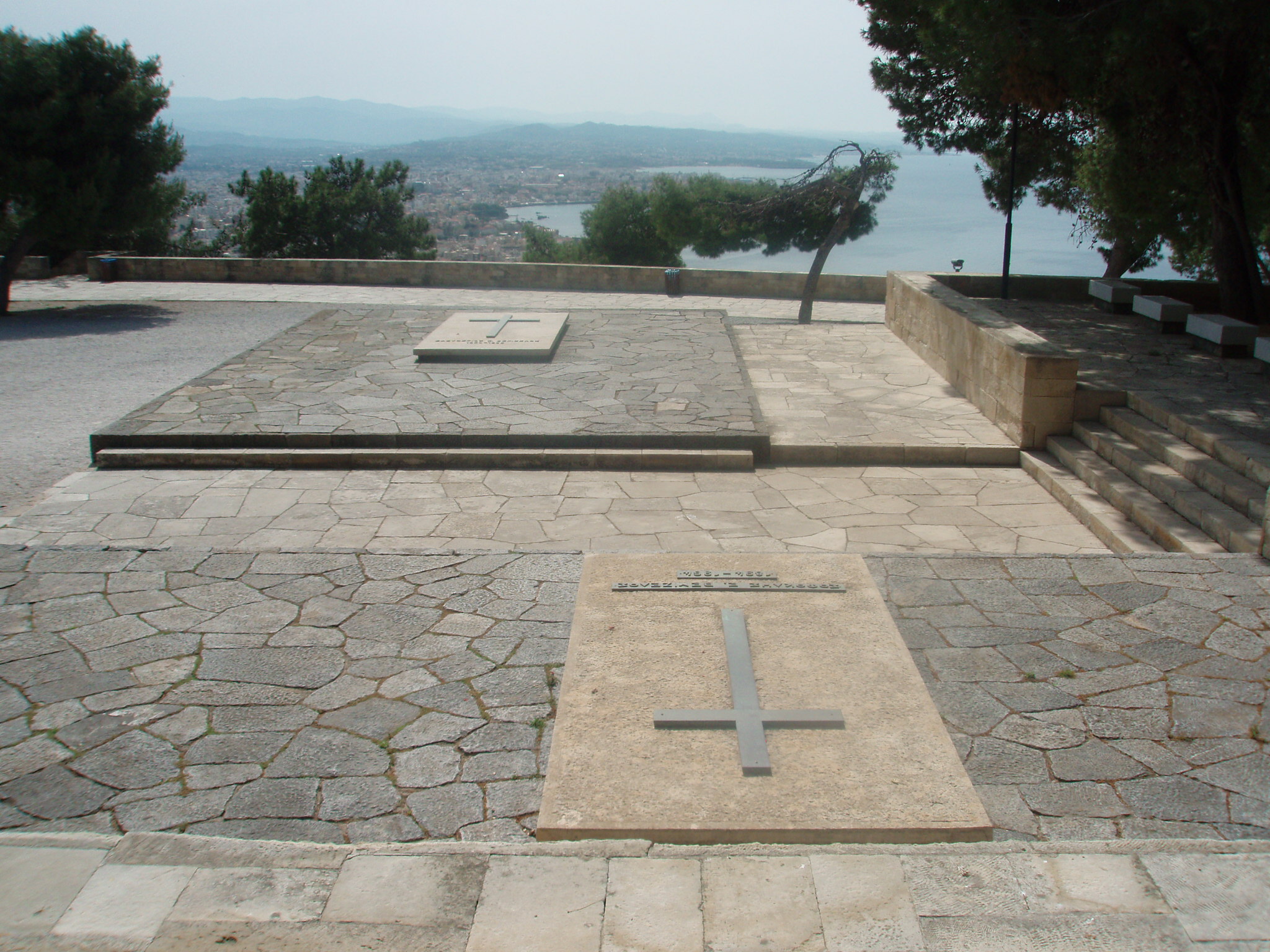
    And an image came into my head. A picture of a grave on the Greek island of Crete, at Moni Profitis Elias, high on a hillside shaded by pines, overlooking the Akrotiri peninsula and the city of Chania. The view from the grave site is breathtaking and every visitor must have taken this photograph, myself included.

    The graves of Elevtherios and Sofokles Venizelos, from Cplakidas photo library
    The article describes Elevtherios Venizelos as the former President of the royal council, but he was that more than once. The name of the current premier, Gounaris, clinched it. This fragment could only have been printed in late March or very early April 1915.
    The Balkan Peninsula between 1878 and 1914, from Tim's wonderful old Atlas of World History

    At the beginning of the first world war, the people of Greece were united behind their king, Constantine I, and his President of Council, Elevtherios Venizelos. They had just emerged war-weary but victorious from the Balkan Wars against Bulgaria. This victory had doubled the territory of a nation that did not exist as such eighty years earlier. Greece and Bulgaria both remained neutral at the outbreak of war, even though a murder in Serbia, which shared frontiers with both countries, was the trigger for the war. Serbia, like Greece and Russia, is an Orthodox country and the natural sympathies of most Greeks lay with the Serbs. Constantine, however, grandson of a Danish princeling and of Hapsburg blood, was Kaiser Willhelm's brother-in-law.

    Constantine the victorious. The caption calls him Constantine 12th, in the Byzantine imperial line


    Elevtherios Venizelos - in retirement
    By the end of the war, Constantine had been forced to abdicate in favour of his son, Alexander, and a Greek army of 300,000 was fighting German and Austrian forces in Macedonia alongside troops from France, Russia and Britain. Venizelos was again President of the Royal council, but there were deep divisions in Greece between Royalists and Venizelists, those who wanted the status quo and those who favoured a Greater Greece.  Greeks had raised their hands against Greeks, blood had been shed, and there was more, much more, to come.

    An outline of the extraordinary period in Greek history between 1914 and 1918 can be found here. All I can attempt to do here is concentrate on the few weeks during which our newspaper was published.

    In March 1915 "the enterprise of the Dardanelles", as Venizelos called it, was at its height, if such it may be called, and the Greek government had dithered about providing any support whatsoever to either side, refusing the warships of the Great Powers coaling facilities.

    Venizelos resigned as president of the council of King Constantine of Greece on 6th March 1915 over a proposal under the benign supervision of the Great Powers, and by Sir Edward Grey and the British government in particular, for Bulgaria and Greece to come out of neutrality simultaneously and attack the Ottoman forces. The inducement to be offered to Bulgaria was a port, Kavalla, on the Aegean Sea (see the map). The land, referred to in the article as "the cazas of Sarichabon, Cavalla and Drama" was part of Greece, recently acquired the hard way in the latest of a series of bruising wars with Bulgaria. "The Bulgarian threat" (le péril Bulgare) was still of great concern in Greece.

    Greece, in return for her sacrifice, was to be granted a much larger area, on the mainland of Asia Minor, then part of the Ottoman Empire, longer ago part of the Byzantine empire, in the present day the western half of Turkey.  Many of the inhabitants of this area (what? Oh yes, them) were Greek-speaking, and the proposals revealed in an article in le Matin casually referred to managed mass relocation as though people could be taken out of their boxes and moved around and swapped like toy soldiers.

    W. Holt-Wright, writing in the Daily Express of 29th March 1915, was one of few British journalists to take Venizelos seriously. He says:
    M. Venizelos is the idol of Greece; he has steered his country to victory in two successive wars, and he, more than any man, has brought about a spirit of Greek revival, and has inspired his countrymen to espouse the great cause of the liberation of the 4,000,000 Greeks who still remain the pitiful vassals of the Turk....
    M. Venizelos’ plan was clean-cut, comparatively simple, and extraordinarily bold. In effect, he said, the Great Powers are much too busy to interfere; let the Balkan States, therefore, forget their recent quarrels, revive the shattered League, which must now include Roumania, hurl the Turks from Asia Minor, and repatriate their various lost tribes. The Allies, he assured the Greeks, must inevitably win, and when the war was over, apart from the fact that possession was nine points of the law, they would be too sensible of the great help the Balkan States had afforded them to rob them of the fruits of victory.
    Nothing, of course, except some possible difficulties in the case of Italy, could have been more welcome to the Allies, and the Greeks were buoyed up with hope and a real and splendid endeavour. Roumania might raise objections, but M. Venizelos was quite certain that an arrangement could be made with her. She also had people — under the heel of Hungary — to be freed.
    So far. so good. It was on the question of the bargain with Bulgaria that M. Venizelos nominally fell. He proposed to set a sprat to catch a whale  — that is, he was prepared to cede Bulgaria a small portion of Grecian territory in return for a much larger tract of territory in Asia Minor when the resuscitated Balkan League should have wrested it from the Turk.
    From the point of plain common sense it is hard to see where M. Venizelos erred in his calculations and designs. He proposed, reluctantly of course, to surrender the Kavalla district, which has an extent of 2,000 square kilometres and a population of 30,000, but in return Greece was to receive in Asia Minor territory amounting to 125,000 square kilometres, the inhabitants of which -- mostly Greeks — number nearly a million. Thus, in tho event of victory, M. Venizelos would have nearly doubled the present size of Greece, and would have added nearly 20 per cent to the present population.
    It was a great dream and a bold scheme and there were unquestionably "conversations” with both Roumania and Bulgaria...
    At the promptings of King Constantine, the military declared that the army had not yet recovered from the past two wars. M. Venizelos made answer that an expeditionary force of 50,000 men would be sufficient to secure his purpose and win the goodwill of the Allies.

    He also proudly pointed to the fact that during the recent Balkan wars 40,000 Greeks, practically an army corps, had alone come over from the United States — where there are 500,000 of them — and had not merely paid all their expenses for the honour of fighting for Greece, but had actually brought all their savings to pay into the Greek Treasury to aid the success of the campaign.

    Next, the Greek financiers were brought to bear on M. Venizelos’ venture. The monetary burden of the campaign, they said, would be more than Greece could support. To all intents and purposes M. Venizelos retorted, “ Nothing ventured, nothing gained.” [nothing changes much here, does it?]
    The strictly private and confidential “conversations” with Roumania and Bulgaria went on, and, at the last, there is no doubt that M. Venizelos thought the way was clear for war. Then King Constantine hurled his neutral bombshell. He would never consent to cede an inch of Greek territory, ho said, no matter what was to be got in return; and he declared that he had never allowed M. Venizelos to suppose that he could conduct any negotiations upon such lines.
    Deeply offended by the perceived insult,Venizelos resigned, vowing to give up politics forever, but not before publishing the whole thing in the Patris newspaper. The proposal (somewhat selectively) and a slagging by the ultra-conservative toady Gounaris, are the subject of this article.

    For once, I have actually located the entire article in the pages of Le Petit Journal at la Bibliothèque Nationale de France. In the library copy, which is a Paris edition, rather than our provincial one, it was published on 3rd April rather than 4th.

    Other Greek-speaking enclaves around the Mediterranean, such as Corfu, Symi and the Dodecanese, along with Trieste and Trentino, were at this time being bundled up, successfully in this case, as an inducement to Italy to join the war on the Great Powers' side. The story next to the Venizelos article, represented on our fragment only by a list of words, proved to have the title "L'accord de l'Italie avec la Serbie et la Russie".

    Here is an updated reconstruction of the main section of the clipping.
    And here is the whole article, with an English translation.


    And Venizelos? He admired the British and their Parliamentary system. Who was he? A natural politician, born into a relatively humble (i.e. middle class) family in Crete. He is another man who could be called a bundle of energy, a man of massive highs and lows. He rose to the top in the Greek parliament simply by being better than anyone else.

    The elder statesman
    Elevtherios Venezelos is still beloved in his native island. There are daily coach outings to his birthplace in Mournies and to his grave.

    Any suggestion of that he might have lived with a bipolar condition may be considered alongside the fact that he was a Cretan. I can only refer you to the works of his near contemporary and great admirer, Nikos Kazantzakis, and particularly Zorba the Greek.

    Sunday, 26 April 2015

    The first aircraft to go to war

    A Taube throws some bombs ...

    The Etrich Taube was the first warplane used to drop a live bomb on real people. On 1 November 1911, an Italian pilot, Giulio Gavotti, dropped three 1.5kg grenades on the oasis of Ain Zara during the war between Italy and the Ottoman empire, fought in Libya. That is only eight years after the Wright brothers and their exploits at Kitty Hawk. Those smart Wright boys designed a plane for the US Army in 1909 but it was never used in war. Gavotti's letters to his father survived, to be read in a rather cod Italian accent on the BBC World Service (note: in the BBC's picture, Gavotti is not flying a Taube).

    A Taube takes off from a Libyan airfield - card postmarked 31/12/1911
    The Taube, also designed in 1909, by Austrian aviator/engineer Igo Etrich and his partner Franz Wels, first flew in 1910. Much technical detail can be found in Wikipedia here. A full technical review was printed in Flight magazine in February 1915, here.

    Its organic design could so easily have consigned the Taube to that group of nutty aircraft seen destroying themselves in early films - flapping wings that shook the plane apart, multiple wing surfaces like some kind of flying layer cake that collapsed under their own weight, men with wings strapped to themselves and jumping off high buildings with inevitable results, Icarus (except for the films) - but the Taube worked.

    At the heart of the design was the fruit of zanonia macrocarpa (syn.[or ?close relative?] alsomitra macrocarpa), the javanese cucumber. This climbing jungle vine is a member of the pumpkin family (not a palm, as Flight magazine would have it). It produces football-sized gourd-like fruit, suspended high above the forest floor. Its many seeds bear a pair of jelly-like wings, and drop from the bottom of the fruit one at a time.

    Alsomitra macrocarpa seed - photograph taken in Kebun Raya, Bogor, Indonesia, by Scott Zona from Miami, Fl
    The seed glides away, eventually spiralling gently to the ground, sometimes many hundreds of metres from the parent plant.
    Opening fruit (some 30cm in diameter) (lower left), flowers (lower right), winged seed (centre), twining stem with foliage (top) - Not to same scale. 
    after "Meyers großes Konversationslexikon", 6.Auflage; Bd.23; Jahressupplement 1910-1911, S.976

    Scott Zona writes (with my addition of bold face for any reader who is not an aeronautical engineer):
    A bit of flowery prose from an essay that I wrote in 2001 on wind-dispersed seeds & fruits: "Every now and then, field botanists are treated to transcendental moments when the light is golden, the air is fresh, interesting plants are at hand, and the hardships of field work just melt away. During those times, scientific insights arrive with astonishing clarity and grace.
    One such moment for me came on a sunny afternoon in the Kebun Raya Botanic Garden, in Bogor, Indonesia, some years ago. On that memorable day, I was transfixed as I watched dozens of winged seeds of Alsomitra macrocarpa (Cucurbitaceae, the squash family) glide to the ground in broad, lazy spirals. The seeds spilled out from a fruit hanging on the liana climbing on one of the enormous old trees in the garden.
    All the principles of aerodynamics as they relate to seed dispersal were manifest in that one lovely moment. "The gliding seeds of Alsomitra exhibit two kinds of motion: The forward gliding motion, which takes the seed on a helical, downward path, and phugoid oscillations, in which the gliding seed gains lift, stalls, drops briefly until it accelerates enough to generate lift, starting the process over again.
    Phugoid oscillations are well known to aviation engineers and model aeroplane fliers, because they can destabilize mechanized flight, but in the seeds of Alsomitra, phugoid oscillations add a graceful rhythm to the descent, and more importantly, slow the descent of the seeds giving them more time aloft. Time aloft is the sine qua non of successful dispersal by wind."
    A remarkable film of Alsomitra macrocarpa seeds taking to the air was produced for BBC Earth in 2009.

    The Taube's curved wing surfaces mimicked this seed precisely, so that if the Taube lost power, it would continue to move forward, and eventually glide to the ground. The design made it somewhat of a pig to steer, but flying in a straight line was a doddle. The fly-glide technique enabled Gino Linnekogel and Suvelick Johannisthal to achieve a two-man endurance record for flying a Taube of 4 hours and 35 minutes over Germany in 1911. This made flights from Germany as far as London possible, if precarious.

    Aerial warfare, or hand to hand fighting
    "German Taube in battle with hostile pilots Deutsche Taube im Kampf mit feindlichen Fliegern"
    ***UPDATE***
    Ascent and descent were controlled, not with flaps and ailerons, but by flexing the surface of the wing by means of cords.
    I suppose NASA thinks this (courtesy of BBC News) is new?
    ***END UPDATE***
    The pilot single handed could prime grenades and chuck them out of the cockpit, though with his hands full this left him unable to defend himself.Two-seater and even four-seater models were built.


    "Fruitless bombardment of a German Taube" Erfolglose Beschiessung einer deutschen Taube
    Etrich could not obtain a German patent for the Taube, as his work was based on that of the German botanist Dr Friedrich Ahlborn who published an analysis of the aerodynamics of the seeds in 1903, so in Germany many more versions were constructed, notably by Rumpler. The most likely version used for the raid on Gerardmer was a two-man Rumpler Taube. There was no such thing as an anti-aircraft gun and, on the ground, villagers fired at the Taubes with shotguns and pistols. Ground fire was not particularly effective.

    "A Strange Santa Claus - Voilà le Taube!" - the passage of a hostile aircraft over a town in northern France

    The facsimile sketch from the front by C.J. Payne (above) appeared in The Graphic on January 2, 1915.
    The editor writes:
    the appearance of a hostile aeroplane is the signal for a general fusillade, the returning bullets causing, as a rule, more damage than the bombs dropped by the Taube, so that it is wise to bolt for cover as soon as the firing commences. On the occasion witnessed by our artist, a gallant citizen joined in the fusillade with his revolver, and not until he was presented with numerous bills for broken windows and lamps could he be convinced that his efforts had not been the means of disabling the enemy.
    Technology quickly superseded the originality of the Taube design - the pilot was unable to fire through the propeller, and this facility was developed only for newer, faster planes.

    By 1916 they were restricted to actions over civilian areas - propaganda leafleting, for example, and "irritation" bombing attacks like this one.
    A peaceful view of Gerardmer, the target of the Taube, 1916
    The Owls Head Transportation Museum, Maine, USA, has a working replica of a Taube, which can be seen in operation here...


     ... and there is even a real one, in the Vienna Technical Museum.

    In 1911, Gavotti's surgical strike was described in Italian newspapers as craftsmanship. He could select and pinpoint his targets like a master. The same claim is made for today's precision bombing by pilotless drones.

    But anti-aircraft fire and enemy fighters forced the bombers higher, so that fliers became unable to visualise what they were doing to people on the ground. That way lay the carpet bombing of Coventry, the firestorm over Dresden, the atom bombs of Hiroshima and Nagasaki. Gavotti cannot have guessed what horrors would follow his action.

    Friday, 24 April 2015

    The tough cookie

    The full text of the article about the fire aboard the liner La Touraine in our clipping is now available (see Gallica). Beneath the title La mystère de l'incendie de La Touraine is revealed a tasty bit of gossip, when examined with 20/20 hindsight. Corroborating detail comes from Le Petit Parisien of 4th April 1915.

    Raymond Rolfe Swoboda lived quietly for four years at 24 Boulevard de Rochechouart until August 1913 when he moved out without leaving a forwarding address. He then moved into the newly-built Villa Flore in Viroflay.

    From Le Petit Journal, 4 April 1915
    When the rental agreement for a nine year lease was drawn up in October 1913, the villa in the Rue de la Gare-aux-Marchandises had no name; the proprietor, M. Mandar [or Mandard, Le Petit Parisien], an "ardent patriot" wanted to call it after his native region of Alsace-Lorraine, divided after the Franco-Prussian war so the Lorraine became part of Germany. He was on the point of ordering a nameplate. Hearing this made Swoboda jump. "Oh no", he said, "my wife is called Flore, so call it 'Pavillon Flore', that will go very well, yes" [note, the last word in English]. Out of generosity Mandar complied with his new tenant's request and the house became the Villa Flore.

    When war broke out, Swoboda made it known to his landlord that he was going to join the French armed forces. This touched Mandar's patriotic streak and he accorded his tenant whatever facilities they wished, including an electric burglar alarm. He even renewed his congratulations in a letter a few days later. However, passing Swoboda's workplace towards the middle of September 1914, one month after Swoboda and his wife had moved out, Mandar checked if his tenant had indeed joined the army, and found that he had done no such thing. He addressed a vehement letter to Swoboda, reproaching him for the deception.

    "Do you know what I shall call my Villa now?" Mandar told the Petit Journal, "I shall call it 'Revenge'".

    But who was Flore?

    Flore Emilie Treichler of the multiply-miss-spelled name was a very interesting personality indeed. Born in Rolle, Switzerland on January 25, 1889, she had been with Swoboda for six years, firstly in Rue de Rochechouart, then at the Villa Flore. However by the beginning of April 1915 she was back home again, as a principal singer with the Geneva Opera.  In France, she had appeared very much under Swoboda's influence, a Trilby to his Svengali, as testified by M and Mme Roche, her widely respected teachers of singing and diction.  Her stage name, quoted in Le Petit Journal, Le Petit Havre and elsewhere) was Flore Revalles.

    That same Flore Revalles was headhunted by Leon Bakst, the great theatre designer, to join Sergei Diaghilev's Ballet Russe at the end of 1915 for appearances at the Paris Opera, where she danced in Scheherazade. This was followed in 1916 by a season in New York, at the Century Theatre, and a four week run at the Metropolitan Opera House, which included an appearance with Vaclav Nijinsky in the final dance of Till Eugenspiegel. A copy of her 1916 contract with Diaghilev is in the Victoria and Albert Museum's Diiaghilev Collection, where her real surname has been misread as Crieckler (a real cracker).

    That was quickly followed by a tour of America and Canada. On January 15 1917 she danced the eponymous role of Cleopatra with Nijinsky in Vancouver to rave reviews in the Vancouver Daily Sun. The reviewer swooned that her
    “mesmerizing power over her lover is only less remarkable than her silent power and sovereignty over the spectators.”
    Harvard Theatre Collection
    Likewise the Galveston Daily News, Texas of 26 November 1916, written by someone who likes the word "and" rather a lot:
    "Flore Revalles is her name and she plays in most of the ballets, among them in the ancient story of the snake lady of the Nile, Cleopatra. Flore Revalles is a person all soft curves and long sinuous lines with dark Egyptian colouring and all the attributes of a well regulated vampire. In the story from which the ballet is taken a humble slave dares to love Cleopatra. At first the whole court with the queen stand aghast and astounded at the presumption of the slave; but, swayed by a whim, yields to him for a brief and delirious hour and then kills him with a strange and terrible poison."
    Back in Paris in 1920, she appeared in Pulcinella (ballet with songs written by Massine) and Les Sylphides choreographed by Michel Fokine.

    What do we know about her?

    • She was a good enough dancer in 1916 and 1917 to partner Nijinsky and Adolf Bolm.
    Scheherazade, with Adolf Bolm

    Cleopatra, with Nijinsky, by Karl Struss, 1916
    • She was a good enough singer on the Broadway stage, in the reviews Miss 1917 (1917) and Monte Cristo (1919) accompanied by the then unknown George Gershwin. 
    • She was a good enough actress to appear in two films, as Messalina in Woman (1918) and Daisy Rittenshaw in Earthbound (1920)  both now regarded as lost classics. Woman attempted somewhat daringly to tell the story of womankind from Eve to the present day, Messalina being the promiscuous wife of the Roman emperor Claudius. In the spooky Earthbound, Daisy Rittenshaw's husband murders his best friend on discovering that he is having an affair with his wife. The lover comes back as a ghost incapable of moving except to protect those he has wronged.

    • She was cool enough to disclose in 1916 that she had adopted a cobra to help her performance in dancing the part of Cleopatra, saying that "the cobra is the most graceful of all snakes", This made the headlines and ensured the maximum of publicity for her appearances. 

    • She had bunions, the curse of the ballet (see above).
    • She was well enough known world-wide for her portrait to hang in the National Portrait Gallery in London.
    Flore Revalles by Emil Otto ('E.O.') Hoppé, c. 1917, Photogravure, National Portrait Gallery
    • And she was a tough enough cookie to front a lawsuit by the cast of The Century Girl and Miss 1917 against the Century Corporation for non-payment for their work. She won her case, sending the theatre into bankruptcy. 
    She died, aged 77, in Switzerland in 1966. There is no record of her ever marrying.

    Could she have been Swoboda's wife, not just his "petite amie"? 

    When interviewed by the Geneva correspondent of Le Matin about the accusations against Swoboda she seems genuinely confused at the flood of misinformation. But then, as we have just said, she was a good actress. (t must have been painful to realise that her friend was lying to her just as much as to everyone else. But then, she was a tough cookie. Here is my translation of the Le Matin report as published by Le Petit Havre of 4th April 1915.
    I have seen Miss Flora Treichler, girlfriend of Raymond Swoboda. The young artist is presently Principal singer [première chanteuse] at the theatre of Geneva, where, under the name of Flore Revalles, she sings with success in several operas.
    Miss Treichler, who is of Swiss origin, declared to me:
    "I've known Raymond Swoboda for six years. I know that he worked on numerous commercial and financial deals, but I didn't know the details. M. Swoboda, who is rather taciturn, said nothing to me about his private business."
    Swoboda's girlfriend affirmed to me that the financier is indeed American.
    "He is the son", she said to me "of a very rich family in New York. [Italics as printed]. After several disagreements, his father closed his purse to him. One of his brothers is presently an interpreter with an English cavalry regiment.
    "My friend", Miss Treichler continued, "never belonged to the German or Austrian army. It's true that in the course of the search at our villa in Viroflay a photograph of people in German uniforms was found, the explanation is very simple. Raymond Swoboda was a student at Heidelberg. He still has family in Germany and it's possible that he had his picture taken with friends or family."
    "Do you know", I asked, "of the deposit made by M. Swoboda of five trunks, in the offices of a business in the Avenue de l'Opera?"
     "I know," the singer replied, "that my friend conducted various business deals with America and that he had just concluded an important market to distribute many American products  in France.
    "The trunks you refer to simply contained samples of these products. Besides, he didn't expect to limit the placement of these goods to France alone, for here is a letter where he asks me if some of some of the products might not be placed in Switzerland, and which in my opinion would have the best chance of selling here.
    "This letter proves that my friend wanted only to conduct commercial  business, and I do not believe one scrap in his guilt. Here is another letter. It is dated 4th March. Raymond Swoboda writes to me:
    - 'Once more I find myself on a French liner. I preferred in the end to avoid a useless stay in England, for the traffic is so very heavy between the two countries, that I risk losing all the advantage that the Lusitania might have given me.'
     "Here is another letter. This was written aboard the Touraine, on 7th March, in sight of Brest.
    - 'I would have been better to follow my original plan, rather than leaving on the Touraine, for if ever we had a lucky escape, this time was it.'
    "You can see for yourself," continued the financier's girlfriend, "that Swoboda told me all about the phases of the fire alarm which was raised the day before on board the liner. You can read hear as well that he passed on to me the opinion of the ship's officers, saying that the fire was certainly due to a deliberate act of malice  and that the fire could only be set with the aide of an explosive device [infernal machine] placed in the middle of the merchandise in the hold."
    "No", Miss Treichler concluded, "Raymond Swoboda could not be guilty of what they accuse him of, and I am certain that he is the victim of a horrible plot or a dreadful mistake."
    [Thus when one has just read this dispatch, there is reason to remark that Miss Treichler declares that Raymond Swoboda's family is from New York. In the identity papers he possessed at the time of his association with M. Raguit, the financier of the Rue de Provence, Swoboda's papers seem to establish that he was born in Quebec, and on different occasions he told M Raguit about the properties his family owned in that city.
    Finally the papers that he presented at the Viroflay town hall, when he came to register as an alien, indicated that he was born in San Francisco.These were the same papers that he presented at the U.S. embassy when he went to get his passport for America, at the end of last December.]
    According to the information provided at the parliamentary sitting by M. Malvy, minister of the interior, it appears that Swoboda was born on 6 February 1878 in San Francisco, of American parents, and he made his declaration of American citizenship in Viroflay, last year.
    Elsewhere, according to a dispatch from Washington by the Havas agency, Mr MacLea, an associate of Swoboda, would be addressing a request to the state Department to protect him.
    "The case against him is absurd", he declared. "Swoboda was only engaged in purchases of fabrics and other furnishings."

    Treichler/Revalles's Wikipedia entry is longer than Swoboda's. And it makes no mention of him. Nor is he mentioned in any of the show-business web sites that include vignettes of her life and career, or in the history of the Ballet Russe.

    She seems to have completely remade herself after his arrest. The strategic move to Switzerland had already taken place. It only took nine months for her to re-establish herself in the Geneva Ballet, where she would come to Bakst's notice, and to join the re-forming Ballet Russe. Clearly she was not broken-hearted over her split with him.

    And she was not pretty. She was beautiful.

    Library of Congress

    Library of Congress
    Dating the famous

    I like this one best - Dating the famous
    Or maybe this one? Wikipedia creative commons