Touraine - from then until now!

This blog is an attempt to show some of the vast history of Man's prescence in the Southern Touraine.... from first footfall to the present....
especially in and around le Grand Pressigny area.... with special emphasis on life at and around le Moulin de la Forge.
There will also be occasional entries about time before man was here and when the area was at the bottom of a warm, shallow sea...


Showing posts with label Raymond Swoboda. Show all posts

Tuesday, 14 September 2021

Swoboda and the radical lawyer


La Touraine with two masts


In April 1 1915, Raymond Swoboda was charged with the sabotage of the liner La Touraine on which he was a passenger. Subsequently he was also charged with espionage. He chose as his défenseur Maitre Alexandre Zévaès, as was reported in Le Petit Havre of 29th April 1915. A défenseur is effectively a barrister, and stands up in court on his client's behalf, but would have done a lot of the digging work as well. Zevaes agreed to act for Swoboda.


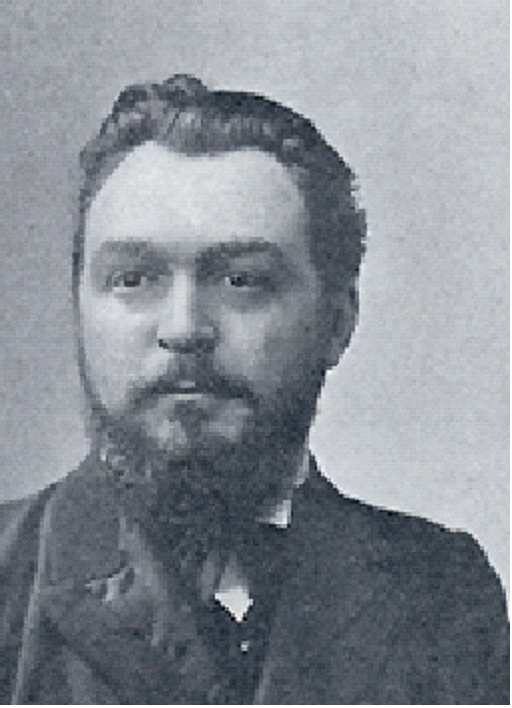
Alexandre Zévaès - from the library of the Assemblée Nationale

Zévaès was the nom de guerre of Alexandre Bourson, who chose this pseudonym in homage to the writers Michel Zévaco (1860-1918, anarchist) and Jules Vallès (1832-1885, socialist). As well as a lawyer, he was a writer and a politician. According to his Wikipedia entry, Zévaès was an MP, deputé for the département of Isère between 1898 and 1902 and from 1904 to 1910,  as a member of the (marxist) Parti Ouvrier Français. From 1898 he was an active Dreyfusard. He was a significant enough barrister to act for the assassin of Jean Jaurès in 1917. He is known today for his series of books on the history of Socialism under the Third Republic. And he was a freemason.

Much was made in the press of reported sightings of Swoboda sneaking around the streets of Viroflay where he lived, "dressed as a mason", this being cited as proof that he was spying, or at the very least up to no good. Come on chaps, wakey wakey. He was a freemason too, wasn't he? That's why a notable lawyer agreed to act for a nobody like Swoboda - he was a brother.

By 28th June 1915 the sabotage charge had been dropped, as it was apparent that the fire was accidental (despite "Secret History" including it on its list of sabotage operations), and the only evidence of the espionage charge was that Swoboda had lied about his background, which is no evidence at all. The charges eventually fizzled out virtually unnoticed by the press, and Swoboda disappeared from the public gaze. This comment in Le Rappel of September 1916 is all I can find:

Le commandant Julien, chargé de l'en-
quête relative à l'affaire Schwind-Swoboda
vient de clore son instruction et a trans-
mis son dossier au gouverneur militaire
de Paris. Il conduit à un non-lieu sur les
deux clefs d'accusation. Si ces conclusions
sont adoptées, Swoboda-Schwind quittera
prochainement la prison de la Santé.

Commandant Julien, charged with the enquiry concerning the Schwind-Swoboda affair, has just completed his investigation and has sent his dossier to the military governor of Paris. He has dismssed both charges. If these conclusions are adopted, Swoboda-Schwind will leave the Santé prison shortly.

Monday, 6 March 2017

The circle of fire - part 1: closing the circle

My interest in the French transatlantic liner La Touraine started with a small piece of newsprint that we found hidden in the masonry of our chimney. That paper proved to date from 4th April 1915, and was torn from the pages of Le Petit Journal. One of the articles on that paper concerned a fire aboard La Touraine which broke out in mid Atlantic on 6th March 1915. That article led me to the extraordinary man who was accused of setting the fire, his even more extraordinary wife, then back in time to the Universal Exhibition before la Touraine was launched,, and forward again to the disasters of the Titanic and the Volturno.

We have now come round in a circle, back to the fire again. This series of posts is intended to close the circle.

Somewhere around there, anyway. Thank goodness for the Wireless Telegraph. From New York Times
Suspicion for the fire initially fell upon passenger Raymond Swoboda. As soon as he was named, the world's press went baying after him and anybody who may have known him slightly, or even not at all, had an opinion to be snapped up and printed. Eventually it was decided that Swoboda had nothing to do with the fire, and he was released. So, let us examine the story of the fire again, this time leaving Swoboda out of the frame.  The results of so doing are most interesting.

This post follows a series of articles in, appropriately, Le Petit Journal, which simply describe the incident as it unfolded. The reports are credited to "our Le Havre correspondent", who alas must remain anonymous. The first was published on 8th March 1915, and the last,  which is part of a much longer article, on 1st April 1915.  The source of these articles is Gallica, the information base of the Bibliothèque Nationale de France.

Le Petit Journal, 8th March 1915

The Touraine fire - nobody hurt

The liner is expected in Le Havre

The reassuring news issued since the night of Saturday to Sunday via a dispatch from New York on the fate of the passengers and crew of La Touraine, the liner which caught fire at sea, was happily confirmed yesterday morning. The Company issued this press release :

La Compagnie Générale Transatlantique received this morning by wireless telegraph a telegram from the commander of La Touraine, saying that the fire, reported yesterday, was not very serious, and that his ship was under way, under her own power, escorted by the steamer Amsterdam, towards Le Havre, where he expected to be able to arrive tomorrow (Monday).

At last the general agent of the Compagnie Générale Transatlantique at Le Havre received, by wireless telegraphy, the following dispatch from Commander Caussin, of La Touraine :
« Sunday, 7 March, 3:45.
«La Touraine having a fire in one hold has asked for aid and is making her way towards Le Havre, under escort by the liner Rotterdam. I hope to master the fire. There is no immediate danger. Fine weather with mist. 

« I expect to arrive on Monday evening, if all goes well. Signed : CAUSSIN ". — (Havas).

They are full of confidence, in Le Havre, at the Company offices on the Boulevard de Strasbourg, about the fate of the passengers and crew of la Touraine. Our local correspondent has seen an individual there who told him that "the fire damage was limited to personal property".

Le Petit Journal, 9 March 1915

La Touraine returned to Le Havre yesterday evening safe and sound

The Captain 's report

Crew and passengers demonstrate superb sang-froid


The Marine Minister announced yesterday morning that one of the two French cruisers which was escorting la Touraine had signalled, on Sunday at 22:00 hours, that the fire was almost out and that the liner was under way at 14 knots towards her destination.

As confirmation of this good news, we have received this evening from our correspondent in Le Havre the following dispatch :
Le Havre, 8 March.
La Touraine arrived this afternoon in the roadstead and entered the docks of the Compagnie Internationale at 4pm. Nothing in her majestic appearance seemed to indicated that the ship had suffered any damage in the course of her voyage. After the usual formalities, Commander Caussin issued us this communication :

It was last Saturday, 6th March, at latitude 48°14" north, longitude 21°06" west, at 2 o'clock in the morning, while kept at my post by a heavy mist, that I was made aware that a fire had broken out in the housing of one of the ventilators of the forward boiler rooms. Voluminous smoke was invading the bridge. 

While the stokers were working at putting out the fire, I hove the ship to, in order to be able to leave the bridge and go to the seat of the blaze. Fire was reported in the post office and it was beginning to take hold in neighbouring facilities. 

It was 2:45 in the morning when I sent out a call for help. Several vessels soon responded to my request. These were the Swanmore, 80 miles away, the Cornishman, 85 miles away, the Keemen, the Rotterdam, 73 miles away, and the Anglo-Australian. All these ships set course towards our position. At 8:30, we were joined by the Rotterdam

She agreed to proceed in convoy with us towards Falmouth. I thanked the other vessels. As for the fire, it was difficult to assess its magnitude, but towards 2 in the morning the blaze appeared to have been extinguished.

At last, it was possible from yesterday (Sunday) to consider ourselves to have mastered the fire. At 11:30 in the morning, the situation further continuing to improve, I notified the Rotterdam that I could continue on my course without her and we separated. We were met at 2 o'clock by two French cruisers which soon returned to their own course.

The commander then declared that there was no substance in the holds susceptible to spontaneous combustion. Then he paid tribute to the sang-froid of the officers and men of his ship. As for the passengers, they had stayed absolutely calm. There was not the least panic. This detail was confirmed by passengers that we interviewed on their disembarkation. Some even affirmed that they had stayed calmly in their cabins.

Admiral Charlier has just decided to set up a commission which would be charged with inspecting the  merchandise which will be brought out of the hold to try to determine the causes of the fire aboard la Touraine. One has the conviction that the accident is not due to an act of malice. A large crowd thronged the quay for the arrival of the ship which bears no external sign of the accident.


Le Petit Journal, 1 April 1915 (extract)

The arrest of the arsonist of the steamship la "Touraine"

The circumstances in which a fire broke out on 6th March last aboard the French steamer la Touraine, in mid-ocean, while she was on her way to Le Havre from New York, had seemed so strange that one is not surprised to learn both that the blaze was caused by a criminal hand and that the presumed arsonist had been arrested.

It is remembered that la Touraine, with 84 passengers aboard, had asked for help by wireless telegraphy and that four vessels had replied to her appeal. One of them, the Rotterdam, stayed nearby the Touraine and convoyed her as far as le Havre, which the French steamship was able to reach under her own steam.

Since this bizarre fire became public knowledge, its cause has been the subject of speculation, and, suspecting malicious intent, the Le Havre police department decided to open an enquiry.

Admiral Charlier, the maritime prefect of Le Havre, took control of this investigation and lost no time in discovering that the explosion which caused the fire took place in hold no. 2 where the first class passengers' baggage was stowed. Therefore, either the explosive was in this baggage, or it had been placed there by one of the travellers.

A fatal decision

... because the holds were locked down during the voyage...


Wednesday, 4 January 2017

The historic ship and the German spy - a couple of alterations

It has come to my attention that my original post about La Touraine needed a bit of rework.

The main problem is that my link to the first photograph of Touraine was leading nowhere. The FrenchLines website, supposedly an archive and resource on the subject of La Compagnie Générale Transatlantique and its ships, has removed its page on Touraine. There is no longer a link from La Touraine in the list of CGT's vessels to a page of her own, and the entry in the list is the only reference on the site.

 This is what I said in the original post:
French Lines is an organisation dedicated to the preservation of that sector of France's nautical history relating to the great maritime companies from 1850 to the present day, not just documents, photos and films, but complete collections of transatlantic passenger lists, posters, furniture, uniforms, logs, jewellery....
 The deleted page contained brief facts and figures from Touraine's first transatlantic voyage from Le Havre to New York, leaving her home port on 20 June 1891, to her last at the end of 1922, and her last voyage of all, leaving Le Havre on 25th November 1923 for the breaker's yard in Dunquerque.

So much for dedication.

 I have therefore substituted a splendid early postcard of Touraine from Creative Commons licenced by www.estampemoderne.eu.

Secondly, the name of the Le Havre laboratory scientist taking part in the investigation of the fire aboard the Touraine was not Sarnac, but Sanarens. He was the director of the laboratory.

You can find the revised version of the post here.

Friday, 24 April 2015

The tough cookie

The full text of the article about the fire aboard the liner La Touraine in our clipping is now available (see Gallica). Beneath the title La mystère de l'incendie de La Touraine is revealed a tasty bit of gossip, when examined with 20/20 hindsight. Corroborating detail comes from Le Petit Parisien of 4th April 1915.

Raymond Rolfe Swoboda lived quietly for four years at 24 Boulevard de Rochechouart until August 1913 when he moved out without leaving a forwarding address. He then moved into the newly-built Villa Flore in Viroflay.

From Le Petit Journal, 4 April 1915
When the rental agreement for a nine year lease was drawn up in October 1913, the villa in the Rue de la Gare-aux-Marchandises had no name; the proprietor, M. Mandar [or Mandard, Le Petit Parisien], an "ardent patriot" wanted to call it after his native region of Alsace-Lorraine, divided after the Franco-Prussian war so the Lorraine became part of Germany. He was on the point of ordering a nameplate. Hearing this made Swoboda jump. "Oh no", he said, "my wife is called Flore, so call it 'Pavillon Flore', that will go very well, yes" [note, the last word in English]. Out of generosity Mandar complied with his new tenant's request and the house became the Villa Flore.

When war broke out, Swoboda made it known to his landlord that he was going to join the French armed forces. This touched Mandar's patriotic streak and he accorded his tenant whatever facilities they wished, including an electric burglar alarm. He even renewed his congratulations in a letter a few days later. However, passing Swoboda's workplace towards the middle of September 1914, one month after Swoboda and his wife had moved out, Mandar checked if his tenant had indeed joined the army, and found that he had done no such thing. He addressed a vehement letter to Swoboda, reproaching him for the deception.

"Do you know what I shall call my Villa now?" Mandar told the Petit Journal, "I shall call it 'Revenge'".

But who was Flore?

Flore Emilie Treichler of the multiply-miss-spelled name was a very interesting personality indeed. Born in Rolle, Switzerland on January 25, 1889, she had been with Swoboda for six years, firstly in Rue de Rochechouart, then at the Villa Flore. However by the beginning of April 1915 she was back home again, as a principal singer with the Geneva Opera.  In France, she had appeared very much under Swoboda's influence, a Trilby to his Svengali, as testified by M and Mme Roche, her widely respected teachers of singing and diction.  Her stage name, quoted in Le Petit Journal, Le Petit Havre and elsewhere) was Flore Revalles.

That same Flore Revalles was headhunted by Leon Bakst, the great theatre designer, to join Sergei Diaghilev's Ballet Russe at the end of 1915 for appearances at the Paris Opera, where she danced in Scheherazade. This was followed in 1916 by a season in New York, at the Century Theatre, and a four week run at the Metropolitan Opera House, which included an appearance with Vaclav Nijinsky in the final dance of Till Eugenspiegel. A copy of her 1916 contract with Diaghilev is in the Victoria and Albert Museum's Diiaghilev Collection, where her real surname has been misread as Crieckler (a real cracker).

That was quickly followed by a tour of America and Canada. On January 15 1917 she danced the eponymous role of Cleopatra with Nijinsky in Vancouver to rave reviews in the Vancouver Daily Sun. The reviewer swooned that her
“mesmerizing power over her lover is only less remarkable than her silent power and sovereignty over the spectators.”
Harvard Theatre Collection
Likewise the Galveston Daily News, Texas of 26 November 1916, written by someone who likes the word "and" rather a lot:
"Flore Revalles is her name and she plays in most of the ballets, among them in the ancient story of the snake lady of the Nile, Cleopatra. Flore Revalles is a person all soft curves and long sinuous lines with dark Egyptian colouring and all the attributes of a well regulated vampire. In the story from which the ballet is taken a humble slave dares to love Cleopatra. At first the whole court with the queen stand aghast and astounded at the presumption of the slave; but, swayed by a whim, yields to him for a brief and delirious hour and then kills him with a strange and terrible poison."
Back in Paris in 1920, she appeared in Pulcinella (ballet with songs written by Massine) and Les Sylphides choreographed by Michel Fokine.

What do we know about her?

  • She was a good enough dancer in 1916 and 1917 to partner Nijinsky and Adolf Bolm.
Scheherazade, with Adolf Bolm

Cleopatra, with Nijinsky, by Karl Struss, 1916
  • She was a good enough singer on the Broadway stage, in the reviews Miss 1917 (1917) and Monte Cristo (1919) accompanied by the then unknown George Gershwin. 
  • She was a good enough actress to appear in two films, as Messalina in Woman (1918) and Daisy Rittenshaw in Earthbound (1920)  both now regarded as lost classics. Woman attempted somewhat daringly to tell the story of womankind from Eve to the present day, Messalina being the promiscuous wife of the Roman emperor Claudius. In the spooky Earthbound, Daisy Rittenshaw's husband murders his best friend on discovering that he is having an affair with his wife. The lover comes back as a ghost incapable of moving except to protect those he has wronged.

  • She was cool enough to disclose in 1916 that she had adopted a cobra to help her performance in dancing the part of Cleopatra, saying that "the cobra is the most graceful of all snakes", This made the headlines and ensured the maximum of publicity for her appearances. 

  • She had bunions, the curse of the ballet (see above).
  • She was well enough known world-wide for her portrait to hang in the National Portrait Gallery in London.
Flore Revalles by Emil Otto ('E.O.') Hoppé, c. 1917, Photogravure, National Portrait Gallery
  • And she was a tough enough cookie to front a lawsuit by the cast of The Century Girl and Miss 1917 against the Century Corporation for non-payment for their work. She won her case, sending the theatre into bankruptcy. 
She died, aged 77, in Switzerland in 1966. There is no record of her ever marrying.

Could she have been Swoboda's wife, not just his "petite amie"? 

When interviewed by the Geneva correspondent of Le Matin about the accusations against Swoboda she seems genuinely confused at the flood of misinformation. But then, as we have just said, she was a good actress. (t must have been painful to realise that her friend was lying to her just as much as to everyone else. But then, she was a tough cookie. Here is my translation of the Le Matin report as published by Le Petit Havre of 4th April 1915.
I have seen Miss Flora Treichler, girlfriend of Raymond Swoboda. The young artist is presently Principal singer [première chanteuse] at the theatre of Geneva, where, under the name of Flore Revalles, she sings with success in several operas.
Miss Treichler, who is of Swiss origin, declared to me:
"I've known Raymond Swoboda for six years. I know that he worked on numerous commercial and financial deals, but I didn't know the details. M. Swoboda, who is rather taciturn, said nothing to me about his private business."
Swoboda's girlfriend affirmed to me that the financier is indeed American.
"He is the son", she said to me "of a very rich family in New York. [Italics as printed]. After several disagreements, his father closed his purse to him. One of his brothers is presently an interpreter with an English cavalry regiment.
"My friend", Miss Treichler continued, "never belonged to the German or Austrian army. It's true that in the course of the search at our villa in Viroflay a photograph of people in German uniforms was found, the explanation is very simple. Raymond Swoboda was a student at Heidelberg. He still has family in Germany and it's possible that he had his picture taken with friends or family."
"Do you know", I asked, "of the deposit made by M. Swoboda of five trunks, in the offices of a business in the Avenue de l'Opera?"
 "I know," the singer replied, "that my friend conducted various business deals with America and that he had just concluded an important market to distribute many American products  in France.
"The trunks you refer to simply contained samples of these products. Besides, he didn't expect to limit the placement of these goods to France alone, for here is a letter where he asks me if some of some of the products might not be placed in Switzerland, and which in my opinion would have the best chance of selling here.
"This letter proves that my friend wanted only to conduct commercial  business, and I do not believe one scrap in his guilt. Here is another letter. It is dated 4th March. Raymond Swoboda writes to me:
- 'Once more I find myself on a French liner. I preferred in the end to avoid a useless stay in England, for the traffic is so very heavy between the two countries, that I risk losing all the advantage that the Lusitania might have given me.'
 "Here is another letter. This was written aboard the Touraine, on 7th March, in sight of Brest.
- 'I would have been better to follow my original plan, rather than leaving on the Touraine, for if ever we had a lucky escape, this time was it.'
"You can see for yourself," continued the financier's girlfriend, "that Swoboda told me all about the phases of the fire alarm which was raised the day before on board the liner. You can read hear as well that he passed on to me the opinion of the ship's officers, saying that the fire was certainly due to a deliberate act of malice  and that the fire could only be set with the aide of an explosive device [infernal machine] placed in the middle of the merchandise in the hold."
"No", Miss Treichler concluded, "Raymond Swoboda could not be guilty of what they accuse him of, and I am certain that he is the victim of a horrible plot or a dreadful mistake."
[Thus when one has just read this dispatch, there is reason to remark that Miss Treichler declares that Raymond Swoboda's family is from New York. In the identity papers he possessed at the time of his association with M. Raguit, the financier of the Rue de Provence, Swoboda's papers seem to establish that he was born in Quebec, and on different occasions he told M Raguit about the properties his family owned in that city.
Finally the papers that he presented at the Viroflay town hall, when he came to register as an alien, indicated that he was born in San Francisco.These were the same papers that he presented at the U.S. embassy when he went to get his passport for America, at the end of last December.]
According to the information provided at the parliamentary sitting by M. Malvy, minister of the interior, it appears that Swoboda was born on 6 February 1878 in San Francisco, of American parents, and he made his declaration of American citizenship in Viroflay, last year.
Elsewhere, according to a dispatch from Washington by the Havas agency, Mr MacLea, an associate of Swoboda, would be addressing a request to the state Department to protect him.
"The case against him is absurd", he declared. "Swoboda was only engaged in purchases of fabrics and other furnishings."

Treichler/Revalles's Wikipedia entry is longer than Swoboda's. And it makes no mention of him. Nor is he mentioned in any of the show-business web sites that include vignettes of her life and career, or in the history of the Ballet Russe.

She seems to have completely remade herself after his arrest. The strategic move to Switzerland had already taken place. It only took nine months for her to re-establish herself in the Geneva Ballet, where she would come to Bakst's notice, and to join the re-forming Ballet Russe. Clearly she was not broken-hearted over her split with him.

And she was not pretty. She was beautiful.

Library of Congress

Library of Congress
Dating the famous

I like this one best - Dating the famous
Or maybe this one? Wikipedia creative commons

Friday, 27 March 2015

The historic ship and the German spy (allegedly)

At her launch in 1891, La Touraine was the finest and largest liner in the fleet of La Compagnie Générale Transatlantique (known as Transat), and the fifth largest in the world. The only limit on her size was her home port of Le Havre; any longer and she would have been unable to get onto her berth.

The liner La Touraine in her original configuration with three masts
For her 506 first-class passengers she was the height of luxury and modern equipment, with electric lighting throughout. "At need, she could also carry 540 emigrants" and many of today's Americans owe their nationality in part to a voyage on La Touraine.

La Touraine - the grand staircase leading from the first class dining room to the 'conversation room', 1891

She was capable of crossing the Atlantic at an average speed of 17.5 knots, driven by the most powerful, up-to-date engines (capable of providing 18,000 hp) that Transat's money could buy, yet she was fully rigged for sail, the last of her kind. There is no evidence that her sails were ever used and one of the masts was removed as part of a major refit in 1902.

La Touraine leaving New York, from the Library of Congress. Two masts now, and shades of Belleville Rendezvous in the style of the depiction.

Her history is remarkable:  throughout, she had one exciting adventure after another. I learned:
  • How thousands boarded La Touraine before she was even built
  • Why her telegraphed warning failed to save the Titanic
  • When her entire crew was awarded Sea Gallantry medals by King George V for saving 41 passengers of a stricken emigrant ship in mid-ocean
But the strangest of all is a story from spring 1915 unfolding in the pages of newspapers across the world, from which we have a teaser in just one corner of our old bit of newspaper. In the dry words of Transat's publicity machine,
Steamship La Touraine, bound from New York to Havre, with an inflammable cargo, was discovered on fire on the morning of March 6. The vessel was 400 miles west of the Irish coast. The SOS call was answered by the steamships Arabic, Cornishman, Swanmore, and Rotterdam. The fire was finally brought under control by the crew. However, the Rotterdam remained near by ready to take off the passengers of the La Touraine should this be found necessary. The appeal for help was heard by a British cruiser, which vessel also responded to the call for assistance, but when she reached the La Touraine assistance was not necessary. The La Touraine was convoyed as far as Prawle Point by Rotterdam, and two French cruisers escorted the injured vessel as far as Cherbourg.
On April 1, 1915 the Pittsburgh Post-Gazette reported:
Raymond Rolfe Swoboda, an American citizen, was arrested for causing the fire on board La Touraine the previous March 6, and for espionage. The enquiry had already established that the fire had started in Hold 2, where three heavy trunks belonging to Swoboda were located. It was claimed that he had expressed fervent pro-german sympathies, that he had wandered around at night dressed as a workman, and that he had lied about his origins.
French newspapers lapped up eye-witness statements from various parties, claiming exclusive reports from La Touraine's captain, Swoboda's girlfriend, his business associates, members of the Bourse, the American ambassador who issued his passport, variously quoting his place of birth as New York, or San Francisco, or Quebec, or Fresno, and his antecedents American (for 200 years), Swedish, French, Russian or German, and his claim that he did or did not speak German.
Raymond Swoboda, from Le Matin, 4th April, and the only picture of him I have been able to locate.

What appears in our cutting is another of these exclusive witness interviews. The names Barbe and Sarnac* appear in no other paper that I have located to date.
If you were born in Fresno, wouldn't it be nicer to say you were from San Francisco?
And the link to our house, well this is La Touraine du Sud, isn't it?
The rest of the Swoboda saga is for another post.
* for Sarnac read Sanarens - ref. le Petit Journal 5th April 1915

Touraine departed on her first transatlantic voyage from Le Havre to New York on 20 June 1891 and her last at the end of 1922. Her last voyage of all left Le Havre on 25th November 1923 for the breaker's yard in Dunquerque.  

Le Conservatoire numérique des Arts et Métiers (CNUM) (**) has the full text of an article by an anonymous, albeit rather excitable, engineer in the scientific publication La Nature of 1891, sketching the luxury of the passenger decks in order to get to a description in immense detail of the new ship's engines.

(**)CNUM is a digital library of the history of science and technology, with the objective of making scientific matters accessible to the general public and preserving that sector of France's heritage.